
Announcement of the Recipients of the Foreign Minister’s Commendation for FY 2026 (September 24, 2026)
On September 24, the Ministry of Foreign Affairs of Japan announced the recipients of the Foreign Minister’s Commendation for FY 2026. The Foreign Minister’s Commendation is awarded to individuals and organizations who have made outstanding contributions to the promotion of friendship and goodwill between Japan and other countries. The purpose of this commendation is to recognize their achievements and to seek broader understanding and support for their activities among all segments of the Japanese public.
From the jurisdiction of the Consulate-General in Denver, the following four individuals and two organizations have been selected as recipients.
[Individuals] (alphabetical order)
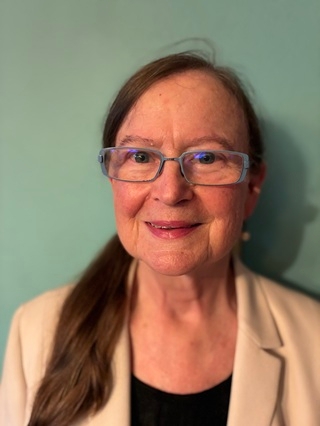
1. Joan Ericson, Professor of Japanese, Emerita, Colorado College
Professor Joan Ericson was appointed Professor of Japanese at Colorado College in 1996, and for nearly 30 years since then, she has dedicated herself to Japanese language education and Japanese cultural studies. At Colorado College, where the curriculum had traditionally been centered on Western studies, she played a central role in establishing the Asian Studies Program and laid the foundation for Japanese language and literature studies. Emphasizing experiential learning, she planned and implemented study abroad programs and short-term training opportunities that allowed students to directly experience Japanese culture and language in Japan. She also promoted faculty exchanges with universities in Asian countries, thereby deepening academic mutual understanding and personal exchanges. Through these efforts, Professor Ericson has contributed greatly to promoting academic exchange and mutual understanding between Japan and the United States.
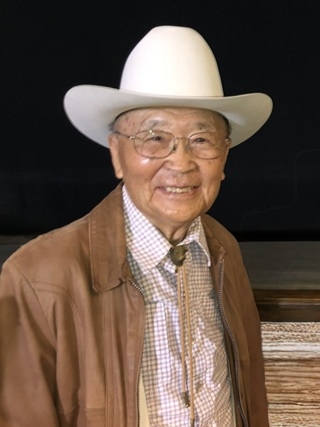
2. Kiichiro John Matsushima, Retired Emeritus, Professor, Department of Animal Sciences, Colorado State University
Dr. John Matsushima devoted many years to teaching and researching at both the University of Nebraska (1949-1961) and at Colorado State University (1961-1992), contributing significantly to the advancement of animal husbandry as a beef nutrionist. In the 1960's, he developed the processing technique known as "Steam Flaking Corn," which transforms corn into cattle feed with higher digestibility and nutritional value. This innovative technology revolutionized the livestock industry worldwide and continues to be utilized globally today.
Dr. Matsushima has trained more than 10,000 students, and alongside his educational and research activities, he has shared his experiences as a Japanese American—facing hardships and overcoming challenges—with local schools and Japanese American communities. Through these efforts, he has greatly contributed to promoting mutual understanding and friendship between Japan and the United States.

3. Susan Schmidt, Emeritus Executive Director of the American Association of Teachers of Japanese
She assumed the position of Executive Director of the American Association of Teachers of Japanese (AATJ) in 1999, and for the past 25 years has supported the operations of the association. In addition to promoting study abroad opportunities in Japan for American students wishing to learn Japanese, she worked to integrate the previously separated communities of primary/secondary and higher education, enabling researchers of Japanese language and teachers from preschool through graduate school to collaborate closely. Through these efforts, she established a network for those engaged in Japanese language research and education, greatly contributing to the spread of Japanese and the development of Japanese language education in the United States. Currently, as Emeritus Executive Director, she continues to devote herself to nurturing the next generation.
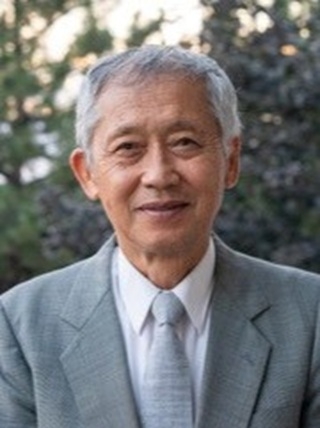
4. Masakazu Watabe, Former Professor, Department of Asian and Near Eastern Languages, Brigham Young University
Since 1974, Professor Masakazu Watabe has taught Japanese at institutions such as the University of Southern California, Middlebury College, and Brigham Young University, and has been involved in Japanese language education in the United States for many years. As a Japanese language educator and researcher, he has published numerous teaching materials and academic papers, worked to establish educational programs, enhanced teacher training, and contributed to the development of future educators. In addition, Professor Watabe has been active in translation and interpretation, including compiling Japanese dictionaries, translating films, and interpreting for dignitaries. He has also served as president of the Utah Association of Teachers of Japanese, striving to advance Japanese language education in the state. Through these wide-ranging activities, he has greatly contributed to the promotion and development of Japanese language education in the United States.
[Groups] (alphabetical order)
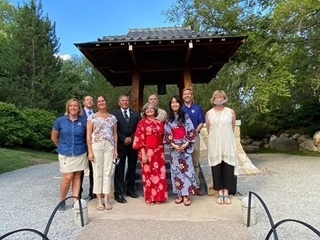
1. Albuquerque Sister City Foundation
The organization was established in Albuquerque, USA in 1956 and was reorganized as the Albuquerque Sister Cities Foundation in 1983. Since then, it has devoted itself for many years to promoting sister city exchanges between Albuquerque and ten international cities. Albuquerque established its sister city relationship with Sasebo City, Nagasaki Prefecture, in 1966, and the Foundation has actively promoted a wide range of exchange activities over the years. These include mutual goodwill visits by mayors and city council members from both cities, student and youth exchanges, homestay programs, and more. In addition, the Foundation has contributed to deepening sister city relations and international friendship by hosting Japanese cultural experience events, such as those held at the "Sasebo Japanese Garden" located within the local botanical garden.
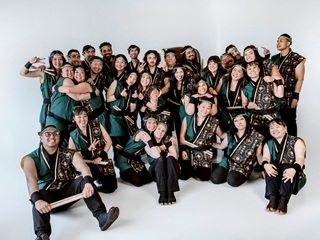
2. Denver Taiko
The organization was established in Denver, Colorado, in 1976, and has long been dedicated to promoting Japanese culture through taiko performances. Its activities extend not only throughout Colorado but also to neighboring states such as Wyoming and Nebraska, where it performs at various cultural events, festivals, schools, and community gatherings. The group also conducts workshops for elementary and middle school students, contributing to the introduction of Japanese culture. Furthermore, it invites Japanese taiko groups for instructional missions, thereby contributing to the preservation and education of Japanese culture.
Our office would like to extend its heartfelt congratulations to all the individuals and organizations who have been honored with this award and express the deepest respect for their outstanding achievements.